All About the DOG Sculpture Installation and Akane Takayama

Akane Takayama (52) Arts Council (2) Childrens-Sculpture (18) Events (3) Key Partners (4) Social Inclusion Element (20) The Pack Gathers (6) Where is my DOG (6)
Showing posts with label Social Inclusion Element. Show all posts

Sunday, 1 August 2010

Clissold Park, now there are more DOGs out there!


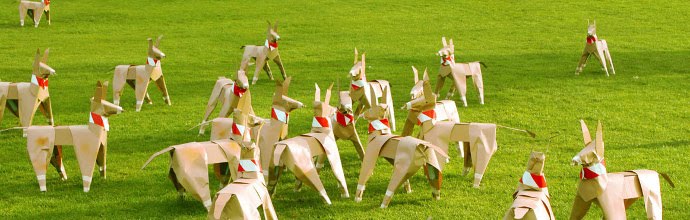
The installation at Clissold Park was a great success. We have spent today tired and worn out after having completed delivery of the installation and a very long day.

Already the images are flowing in and we will be getting them up on line. The image above has come in from Oxford! So yesterday's DOGs have already started their individual journies!

We intend to publish all photographs of the DOGs but do not want to publish any images with children in for obvious reasons. Maybe a sign of a sad world but no need to take any chance
where their welfare is concerned.

Equally, with adults in images with DOG sculptures maybe it would be kind of you to state in a text or e-mail if you want us to post the image freely on the web.

The real beauty is that if you gather images of the DOGs within your own creative reference, then there are none of these more mundane problems. The image above is a good case in point, consider what this image conveys to you in terms of ideas.

Many thanks to all the people who came. You are now all in possession of a limited number of Takayama original sculptures which you can now use to create your own artist images. As a public art sculpture this artist conceived of the idea that she is working beyond the conformity of a gallery or installation but to see the process of 'public art' to move beyond public ownership and into public creativity.

Holland Park is the final physical installation, Sunday 8th August, and after that there are a finite number of DOG sculptures out in the world. Some may be discarded, some may be treasured, some may be forgotten but then what turns up from this art is, once Holland Park is complete, the creative input of you.

We can't wait to see what will happen.

Monday, 28 June 2010

St Scholasticas School, Hackney

One of the underpinning principles of the DOG Sculpture Installation was the desire of the artist to provide something of value to her community. As a consequence she has set up and run sculpture workshops for primary school children in the boroughs of Tower Hamlets and Hackney. The idea behind these was not to bring the children into the DOG Sculpture as "workers" or "contributors" but to bring them in as artistic partners.


For this to work Takayama provided the structure of a sculpture making workshop but did not define the form. In this manner the children, with their teacher, could decide on their own artistic ambitions within the remit of their existing educational programme. The idea was for the children to create their own sculpture which they could see in the context of Takayama's public art work and perhaps consider their own artistic future in the process.


The educational benefits of spatial awareness, three dimensional sculpture construction and then the public acclaim of having your work on public display (both in local venues and on this site) should be self evident.


What continually surprises is the quality of work 8 year old children are capable of when they work with an artist. Some of the drawing skills, some of the conceptualisation and all of the unbounded enthusiasm are simply to be marvelled at.

If we just consider some of the form these children have presented with their drawings, the drawings which are the basis of the model design, then we really have to question why more art workshops are not provided for children in inner city areas.


The purpose of the workshops was to give the children the opportunity to realise spatial awareness, management of projects, design, construction and delivery within the activity of being an artist. All of these skills are valuable educational experiences and reinforce the core curriculum activities but where, especially for children from inner city communities, this approach really has value is in the public presentation of the end results and the consequent approval each child receives for themselves and their work.


Each school involved in the workshops took their own approach, tailored the sculpture construction to relate to existing classroom deliveries. This is the advantage to the schools and the teachers of the approach Akane Takayama has taken; she hasn't sought to impose an "art agenda" on the schools but provide an "art opportunity" which the schools can fit within their own educational management schedule and adapt the workshop content to support that schedule.


The skills and imagination are plain for all to see. As you look through these models consider the detail and imagination these children have employed.

Burbage School, Hackney

One of the underpinning principles of the DOG Sculpture Installation was the desire of the artist to provide something of value to her community. As a consequence she has set up and run sculpture workshops for primary school children in the boroughs of Tower Hamlets and Hackney. The idea behind these was not to bring the children into the DOG Sculpture as "workers" or "contributors" but to bring them in as artistic partners.

For this to work Takayama provided the structure of a sculpture making workshop but did not define the form. In this manner the children, with their teacher, could decide on their own artistic ambitions within the remit of their existing educational programme. The idea was for the children to create their own sculpture which they could see in the context of Takayama's public art work and perhaps consider their own artistic future in the process


The educational benefits of spatial awareness, three dimensional sculpture construction and then the public acclaim of having your work on public display (both in local venues and on this site) should be self evident.


What continually surprises is the quality of work 8 year old children are capable of when they work with an artist. Some of the drawing skills, some of the conceptualisation and all of the unbounded enthusiasm are simply to be marvelled at.


The purpose of the workshops was to give the children the opportunity to realise spatial awareness, management of projects, design, construction and delivery within the activity of being an artist. All of these skills are valuable educational experiences and reinforce the core curriculum activities but where, especially for children from inner city communities, this approach really has value is in the public presentation of the end results and the consequent approval each child receives for themselves and their work.


Each school involved in the workshops took their own approach, tailored the sculpture construction to relate to existing classroom deliveries. This is the advantage to the schools and the teachers of the approach Akane Takayama has taken; she hasn't sought to impose an "art agenda" on the schools but provide an "art opportunity" which the schools can fit within their own educational management schedule and adapt the workshop content to support that schedule.


The skills and imagination are plain for all to see. As you look through these models consider the detail and imagination these children have employed.

Baden Powell School, Hackney.


One of the underpinning principles of the DOG Sculpture Installation was the desire of the artist to provide something of value to her community. As a consequence she has set up and run sculpture workshops for primary school children in the boroughs of Tower Hamlets and Hackney. The idea behind these was not to bring the children into the DOG Sculpture as "workers" or "contributors" but to bring them in as artistic partners.


For this to work Takayama provided the structure of a sculpture making workshop but did not define the form. In this manner the children, with their teacher, could decide on their own artistic ambitions within the remit of their existing educational programme. The idea was for the children to create their own sculpture which they could see in the context of Takayama's public art work and perhaps consider their own artistic future in the process.


The educational benefits of spatial awareness, three dimensional sculpture construction and then the public acclaim of having your work on public display (both in local venues and on this site) should be self evident.


The purpose of the workshops was to give the children the opportunity to realise spatial awareness, management of projects, design, construction and delivery within the activity of being an artist. All of these skills are valuable educational experiences and reinforce the core curriculum activities but where, especially for children from inner city communities, this approach really has value is in the public presentation of the end results and the consequent approval each child receives for themselves and their work.


Each school involved in the workshops took their own approach, tailored the sculpture construction to relate to existing classroom deliveries. This is the advantage to the schools and the teachers of the approach Akane Takayama has taken; she hasn't sought to impose an "art agenda" on the schools but provide an "art opportunity" which the schools can fit within their own educational management schedule and adapt the workshop content to support that schedule.


The skills and imagination are plain for all to see. As you look through these models consider the detail and imagination these children have employed.

Stewart Hedlam School, Tower Hamlets

One of the underpinning principles of the DOG Sculpture Installation was the desire of the artist to provide something of value to her community. As a consequence she has set up and run sculpture workshops for primary school children in the boroughs of Tower Hamlets and Hackney. The idea behind these was not to bring the children into the DOG Sculpture as "workers" or "contributors" but to bring them in as artistic partners.


For this to work Takayama provided the structure of a sculpture making workshop but did not define the form. In this manner the children, with their teacher, could decide on their own artistic ambitions within the remit of their existing educational programme. The idea was for the children to create their own sculpture which they could see in the context of Takayama's public art work and perhaps consider their own artistic future in the process.


The educational benefits of spatial awareness, three dimensional sculpture construction and then the public acclaim of having your work on public display (both in local venues and on this site) should be self evident.


What continually surprises is the quality of work 8 year old children are capable of when they work with an artist. Some of the drawing skills, some of the conceptualisation and all of the unbounded enthusiasm are simply to be marvelled at.


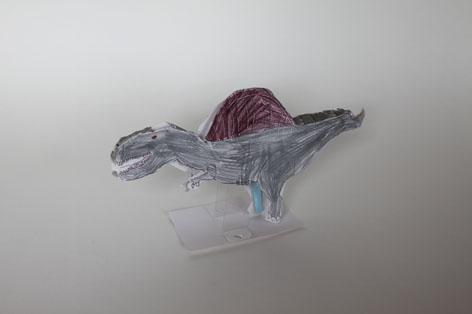
For example, three dimensional models of whales and orca where the detail of the whale spouting is rendered. If we just consider some of the form these children have presented with their drawings, the drawings which are the basis of the model design, then we really have to question why more art workshops are not provided for children in inner city areas.


The purpose of the workshops was to give the children the opportunity to realise spatial awareness, management of projects, design, construction and delivery within the activity of being an artist. All of these skills are valuable educational experiences and reinforce the core curriculum activities but where, especially for children from inner city communities, this approach really has value is in the public presentation of the end results and the consequent approval each child receives for themselves and their work.


Each school involved in the workshops took their own approach, tailored the sculpture construction to relate to existing classroom deliveries. This is the advantage to the schools and the teachers of the approach Akane Takayama has taken; she hasn't sought to impose an "art agenda" on the schools but provide an "art opportunity" which the schools can fit within their own educational management schedule and adapt the workshop content to support that schedule.


The skills and imagination are plain for all to see. As you look through these models consider the detail and imagination these children have employed.

St John's School, Tower Hamlets

One of the underpinning principles of the DOG Sculpture Installation was the desire of the artist to provide something of value to her community. As a consequence she has set up and run sculpture workshops for primary school children in the boroughs of Tower Hamlets and Hackney. The idea behind these was not to bring the children into the DOG Sculpture as "workers" or "contributors" but to bring them in as artistic partners.


For this to work Takayama provided the structure of a sculpture making workshop but did not define the form. In this manner the children, with their teacher, could decide on their own artistic ambitions within the remit of their existing educational programme. The idea was for the children to create their own sculpture which they could see in the context of Takayama's public art work and perhaps consider their own artistic future in the process.


The educational benefits of spatial awareness, three dimensional sculpture construction and then the public acclaim of having your work on public display (both in local venues and on this site) should be self evident.


What continually surprises is the quality of work 8 year old children are capable of when they work with an artist. Some of the drawing skills, some of the conceptualisation and all of the unbounded enthusiasm are simply to be marvelled at.


If we just consider some of the form these children have presented with their drawings, the drawings which are the basis of the model design, then we really have to question why more art workshops are not provided for children in inner city areas.


No words necessary here, these sculptures speak for themselves. The untutored eye might see the use of a template here but using a template in designing a sculpture is a skill in itself. The purpose of the workshops was to give the children the opportunity to realise spatial awareness, management of projects, design, construction and delivery within the activity of being an artist. All of these skills are valuable educational experiences and reinforce the core curriculum activities but where, especially for children from inner city communities, this approach really has value is in the public presentation of the end results and the consequent approval each child receives for themselves and their work.


Each school involved in the workshops took their own approach, tailored the sculpture construction to relate to existing classroom deliveries. This is the advantage to the schools and the teachers of the approach Akane Takayama has taken; she hasn't sought to impose an "art agenda" on the schools but provide an "art opportunity" which the schools can fit within their own educational management schedule and adapt the workshop content to support that schedule.


The skills and imagination are plain for all to see. As you look through these models consider the detail and imagination these children have employed.

Nightingale School, Tower Hamlets

One of the underpinning principles of the DOG Sculpture Installation was the desire of the artist to provide something of value to her community. As a consequence she has set up and run sculpture workshops for primary school children in the boroughs of Tower Hamlets and Hackney. The idea behind these was not to bring the children into the DOG Sculpture as "workers" or "contributors" but to bring them in as artistic partners.


For this to work Takayama provided the structure of a sculpture making workshop but did not define the form. In this manner the children, with their teacher, could decide on their own artistic ambitions within the remit of their existing educational programme. The idea was for the children to create their own sculpture which they could see in the context of Takayama's public art work and perhaps consider their own artistic future in the process.

The educational benefits of spatial awareness, three dimensional sculpture construction and then the public acclaim of having your work on public display (both in local venues and on this site) should be self evident.


What continually surprises is the quality of work 8 year old children are capable of when they work with an artist. Some of the drawing skills, some of the conceptualisation and all of the unbounded enthusiasm are simply to be marvelled at.


If we just consider some of the form these children have presented with their drawings, the drawings which are the basis of the model design, then we really have to question why more art workshops are not provided for children in inner city areas.


No words necessary here, these sculptures speak for themselves. The untutored eye might see the use of a template here but using a template in designing a sculpture is a skill in itself. The purpose of the workshops was to give the children the opportunity to realise spatial awareness, management of projects, design, construction and delivery within the activity of being an artist. All of these skills are valuable educational experiences and reinforce the core curriculum activities but where, especially for children from inner city communities, this approach really has value is in the public presentation of the end results and the consequent approval each child receives for themselves and their work.


Each school involved in the workshops took their own approach, tailored the sculpture construction to relate to existing classroom deliveries. This is the advantage to the schools and the teachers of the approach Akane Takayama has taken; she hasn't sought to impose an "art agenda" on the schools but provide an "art opportunity" which the schools can fit within their own educational management schedule and adapt the workshop content to support that schedule.

Mowlem School, Tower Hamlets

One of the underpinning principles of the DOG Sculpture Installation was the desire of the artist to provide something of value to her community. As a consequence she has set up and run sculpture workshops for primary school children in the boroughs of Tower Hamlets and Hackney. The idea behind these was not to bring the children into the DOG Sculpture as "workers" or "contributors" but to bring them in as artistic partners.

For this to work Takayama provided the structure of a sculpture making workshop but did not define the form. In this manner the children, with their teacher, could decide on their own artistic ambitions within the remit of their existing educational programme. The idea was for the children to create their own sculpture which they could see in the context of Takayama's public art work and perhaps consider their own artistic future in the process.


The educational benefits of spatial awareness, three dimensional sculpture construction and then the public acclaim of having your work on public display (both in local venues and on this site) should be self evident.


What continually surprises is the quality of work 8 year old children are capable of when they work with an artist. Some of the drawing skills, some of the conceptualisation and all of the unbounded enthusiasm are simply to be marvelled at.


If we just consider some of the form these children have presented with their drawings, the drawings which are the basis of the model design, then we really have to question why more art workshops are not provided for children in inner city areas.


No words necessary here, these sculptures speak for themselves. The untutored eye might see the use of a template here but using a template in designing a sculpture is a skill in itself. The purpose of the workshops was to give the children the opportunity to realise spatial awareness, management of projects, design, construction and delivery within the activity of being an artist. All of these skills are valuable educational experiences and reinforce the core curriculum activities but where, especially for children from inner city communities, this approach really has value is in the public presentation of the end results and the consequent approval each child receives for themselves and their work.


Each school involved in the workshops took their own approach, tailored the sculpture construction to relate to existing classroom deliveries. This is the advantage to the schools and the teachers of the approach Akane Takayama has taken; she hasn't sought to impose an "art agenda" on the schools but provide an "art opportunity" which the schools can fit within their own educational management schedule and adapt the workshop content to support that schedule.

Malmesbury School, Tower Hamlets

One of the underpinning principles of the DOG Sculpture Installation was the desire of the artist to provide something of value to her community. As a consequence she has set up and run sculpture workshops for primary school children in the boroughs of Tower Hamlets and Hackney. The idea behind these was not to bring the children into the DOG Sculpture as "workers" or "contributors" but to bring them in as artistic partners.

For this to work Takayama provided the structure of a sculpture making workshop but did not define the form. In this manner the children, with their teacher, could decide on their own artistic ambitions within the remit of their existing educational programme. The idea was for the children to create their own sculpture which they could see in the context of Takayama's public art work and perhaps consider their own artistic future in the process.

The educational benefits of spatial awareness, three dimensional sculpture construction and then the public acclaim of having your work on public display (both in local venues and on this site) should be self evident.

What continually surprises is the quality of work 8 year old children are capable of when they work with an artist. Some of the drawing skills, some of the conceptualisation and all of the unbounded enthusiasm are simply to be marvelled at.

The purpose of the workshops was to give the children the opportunity to realise spatial awareness, management of projects, design, construction and delivery within the activity of being an artist. All of these skills are valuable educational experiences and reinforce the core curriculum activities but where, especially for children from inner city communities, this approach really has value is in the public presentation of the end results and the consequent approval each child receives for themselves and their work.


Each school involved in the workshops took their own approach, tailored the sculpture construction to relate to existing classroom deliveries. This is the advantage to the schools and the teachers of the approach Akane Takayama has taken; she hasn't sought to impose an "art agenda" on the schools but provide an "art opportunity" which the schools can fit within their own educational management schedule and adapt the workshop content to support that schedule.


The skills and imagination are plain for all to see. As you look through these models consider the detail and imagination these children have employed.

Harbinger School, Tower Hamlets

One of the underpinning principles of the DOG Sculpture Installation was the desire of the artist to provide something of value to her community. As a consequence she has set up and run sculpture workshops for primary school children in the boroughs of Tower Hamlets and Hackney. The idea behind these was not to bring the children into the DOG Sculpture as "workers" or "contributors" but to bring them in as artistic partners.

For this to work Takayama provided the structure of a sculpture making workshop but did not define the form. In this manner the children, with their teacher, could decide on their own artistic ambitions within the remit of their existing educational programme. The idea was for the children to create their own sculpture which they could see in the context of Takayama's public art work and perhaps consider their own artistic future in the process.

The educational benefits of spatial awareness, three dimensional sculpture construction and then the public acclaim of having your work on public display (both in local venues and on this site) should be self evident.

What continually surprises is the quality of work 8 year old children are capable of when they work with an artist. Some of the drawing skills, some of the conceptualisation and all of the unbounded enthusiasm are simply to be marvelled at.

For example, three dimensional models of whales and orca where the detail of the whale spouting is rendered. If we just consider some of the form these children have presented with their drawings, the drawings which are the basis of the model design, then we really have to question why more art workshops are not provided for children in inner city areas.


Rabbits! No words necessary here, these sculptures speak for themselves. The untutored eye might see the use of a template here but using a template in designing a sculpture is a skill in itself. The purpose of the workshops was to give the children the opportunity to realise spatial awareness, management of projects, design, construction and delivery within the activity of being an artist. All of these skills are valuable educational experiences and reinforce the core curriculum activities but where, especially for children from inner city communities, this approach really has value is in the public presentation of the end results and the consequent approval each child receives for themselves and their work.

Each school involved in the workshops took their own approach, tailored the sculpture construction to relate to existing classroom deliveries. This is the advantage to the schools and the teachers of the approach Akane Takayama has taken; she hasn't sought to impose an "art agenda" on the schools but provide an "art opportunity" which the schools can fit within their own educational management schedule and adapt the workshop content to support that schedule.
The skills and imagination are plain for all to see. As you look through these models consider the detail and imagination these children have employed.


Sunday, 23 May 2010

Children's Exhibition at The Ideas Store in Bow


The Ideas Store Bow present Models from
the DOG Sculpture Workshops.

On Saturday 23.05.2010 the models from some of the schools in Tower Hamlets which have participated in the model making workshops went on public display. Akane Takayama installed and exhibition of models from Marion Richardson, Bonner and Hermitage schools in Tower Hamlets. Below are the images of the display.


Marion Richardson School went with a theme of birds in their model making class. As you can see not only did they produce creative work but the pupils learnt something of the principles of 3D model construction.

Hermitage School produced some very interesting material and special attention should be drawn to the four legged duck. As with the other schools the models are a definitive example of the imagination and ability of the children within these communities.


Bonner School children provided models that really were outstanding in terms of concept and design. The children found in the workshop not only a means to express themselves but also a forum for asking truly pertinent questions about art.

The pictures below show how the public exhibition within the Ideas Store has been presented.